
"Inside Alta Developers’ South Florida Strategy with Raimundo Onetto"
South Florida’s development cycle has shifted dramatically over the past five years. Luxury towers dominate the skyline. Pre-construction timelines stretch longer. Foreign capital ebbs and flows. And entire submarkets that barely registered on investor radars are now considered “next.”
For Alta Developers, the moment is less about chasing headlines and more about precision: where to build, what to build, and who it’s truly for.
In conversation with Traded, Principal & CEO Raimundo Onetto outlined how Alta is navigating a saturated luxury cycle, why Hollywood may be one of the region’s most strategic plays, and how an architect’s mindset continues to shape the firm’s execution.
Designing Beyond the Spreadsheet
Alta operates across both condominium and multifamily development, but its internal culture reflects something different from a purely financial operator. Onetto, trained as an architect, remains deeply embedded in the design process.
Onetto explained that instead of sending comments to architects, he sends drawings. That hands-on involvement is part of Alta’s operating DNA. Different architects are selected depending on the typology. High-rise towers demand one design language, mid-rise products another, and multifamily yet another, cost sensitive approach. But across all formats, Alta’s projects are not static from day one.
Selections evolve. Materials improve. Lighting, finishes, and even small experiential details like lobby ambiance are reconsidered during construction. The goal is not to freeze the design at launch, but to refine it continuously as the building moves toward completion.
That architectural immersion, combined with development discipline, defines Alta’s product positioning, especially in competitive submarkets like Edgewater, Coral Gables, and Biscayne Bay.
The result is a portfolio that is not stylistically uniform, but strategically tailored.
The Hollywood Thesis: GAIA
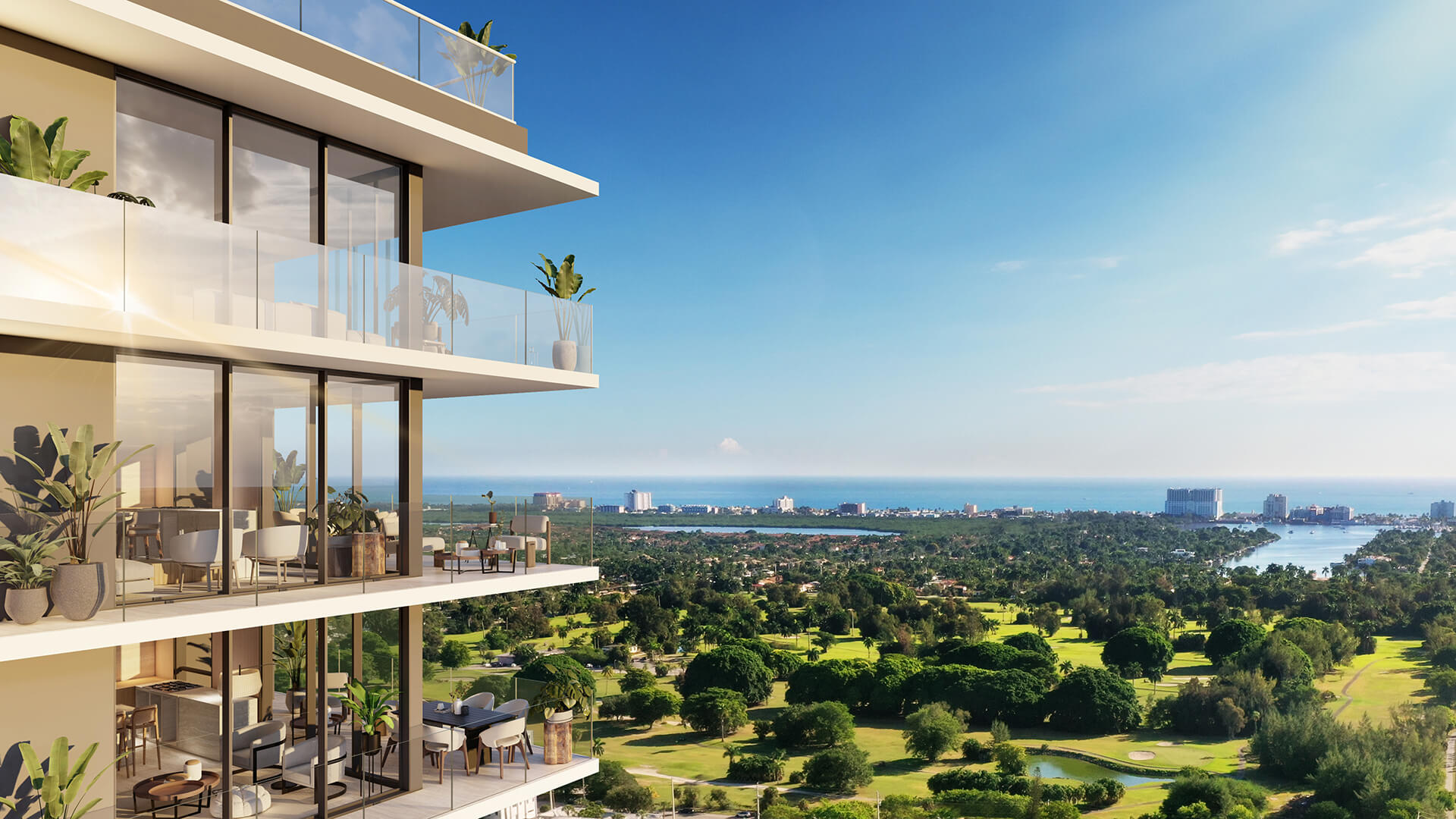
Alta’s newest condominium project, GAIA, sits beside the Hollywood Beach Golf Club, a site Onetto spent nearly a year negotiating to secure.
When Alta first acquired the land, Hollywood was not yet the development hotspot it is becoming today. Since then, the city has seen major public and private investment: a renovated golf course clubhouse, infrastructure improvements, hospital upgrades, and a growing pipeline of residential projects. Onetto estimates roughly 2,500 to 3,000 new units are entering the broader Hollywood market. He describes Hollywood as a city entering its next phase, slightly behind Pompano Beach’s trajectory, but on a similar path.
For Alta, GAIA is positioned to capture that transition point.
Unlike many of the 140 condominium projects currently in development across South Florida, where the average unit price is approximately $2.5 million, GAIA is deliberately targeting a different buyer profile. Rather than focusing exclusively on ultra luxury or international investors, the project is aimed at local residents who are willing to pay around $500,000 for a new one bedroom residence.
With roughly 85% of the existing condominium inventory consisting of older buildings, many facing costly 40-year recertifications and special assessments, Alta sees demand from local owners seeking to exit aging product and move into new construction.
In a cycle saturated with luxury inventory, differentiation is less about flash and more about audience clarity.
Condo vs. Multifamily: Two Completely Different Markets
Alta’s portfolio splits between condominiums and rental products, but the decision between the two is highly localized.
In core Miami neighborhoods, such as Brickell, Coral Gables, and Edgewater, both condo and multifamily can coexist depending on site characteristics, zoning, and buyer profile. In outer markets like Princeton or Boynton Beach, Alta sees rental as the more viable strategy. Condominium products in those locations, in Onetto’s view, do not yet have the necessary buyer base.
In some cases, land can be repositioned depending on where the cycle shifts. But often, the submarket dictates the strategy from the start.
The distinction isn’t merely structural, but rather, it's financial. Condominiums require significant presales (often 40–50%) to secure construction financing. Multifamily operates on an entirely different underwriting framework.
Navigating a Saturated Luxury Cycle
South Florida’s condo market is not short on supply. Brokers are showing buyers five projects instead of one. Incentives are expanding. Decision making timelines are lengthening. Onetto is candid about the reality: when inventory surges, velocity slows.
For Alta, the mitigation strategy comes down to three variables:
- Be in a location that stands out
- Deliver a product that feels different
- Avoid pricing that overshoots the market
Waterfront sites, in particular, remain structurally resilient. As Onetto noted during the interview, water “never fails” in Florida, provided developers do not push pricing beyond reason.
That disciplined approach, especially during late cycle inventory expansion, reflects Alta’s longer term positioning rather than short term speculation.
Building Something That Lasts
When asked whether one project reshaped his thinking, Onetto resisted singling one out. Instead, he emphasized cumulative improvement: every project becoming a benchmark for the next.
But underlying that philosophy is something broader than refinement: It is permanence.
“I think every single project is a lesson learned. It's. You need to be very conscious of what are you doing. When you develop something and you build something, that building or project is going to stay there forever.”
In a market defined by cycles, supply waves, and shifting capital flows, Alta’s strategy ultimately centers on something more fixed: build carefully, design intentionally, and choose locations that will matter long after the cycle turns.
.webp)